


 中文简体
中文简体
Understanding Hydraulic Water Pumps Hydraulic water pumps are pivotal components in modern industrial, agricul...
READ MOREThe key role of Underwater Dredging Robot in modern underwater engineering
What is an Underwater Dredging Robot
Underwater Dredging Robot is an advanced mechanical device designed specifically for underwater dredging and sediment removal. It integrates underwater robotics technology, automatic control systems, and modern dredging techniques to perform complex underwater operations efficiently and precisely. Compared to traditional manual or ship-mounted dredging equipment, Underwater Dredging Robot has significant advantages in safety, efficiency, and environmental impact control.
Traditional dredging operations rely heavily on manual labor or large dredging vessels, which are often limited to shallow or favorable water conditions. In deep water, fast currents, or complex terrains, traditional equipment is inefficient and poses higher safety risks. Underwater Dredging Robot uses Submersible Excavation Technology to autonomously carry out complex dredging tasks, unaffected by depth, current, or visibility.
The Core Role of Submersible Excavation Technology
Submersible Excavation Technology is the core component of Underwater Dredging Robot. It utilizes underwater robotic arms, suction devices, and precision sensors to achieve high-efficiency excavation and transport of sediments. This technology not only improves dredging efficiency but also enables real-time monitoring and data collection to optimize operations while minimizing environmental impact.
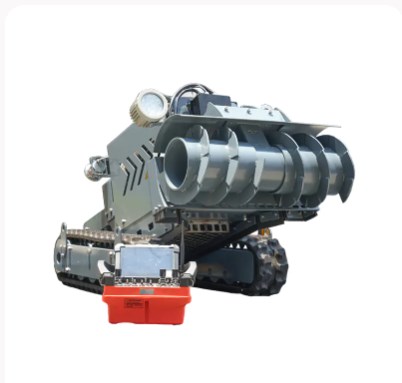
In practice, this technology allows precise control of dredging depth and range, ensuring scientific and efficient sediment removal in rivers, ports, lakes, and coastal waters. Coupled with sensor systems, Underwater Dredging Robot can detect underwater obstacles, terrain changes, and sediment characteristics, enabling fine-tuned operations.
The Importance of Autonomous Dredging Systems in Modern Applications
Autonomous Dredging Systems are a key feature of modern Underwater Dredging Robot. Traditional dredging requires extensive human operation, while autonomous systems allow robots to perform tasks independently under preset programs and intelligent algorithms, reducing labor costs and improving efficiency.
Automation Enhances Dredging Efficiency
Underwater Dredging Robot uses advanced automation control systems to navigate and dredge at various depths and conditions. With path planning algorithms and intelligent recognition, the robot can accurately locate sediment accumulation areas and adjust dredging strategies automatically. This highly efficient autonomous operation significantly shortens dredging cycles while reducing energy consumption.
Reducing Risks and Ensuring Safety
Underwater operations involve risks such as strong currents, low visibility, and obstacles. Traditional manual dredging is prone to accidents in such conditions, while Underwater Dredging Robot equipped with Autonomous Dredging Systems can safely complete tasks without human supervision, reducing the risk of injury and equipment damage.
Integration with Underwater Robotics Engineering
Underwater Robotics Engineering provides a solid technical foundation for autonomous dredging systems. By integrating mechanical design, control algorithms, sensors, and communication systems, Underwater Dredging Robot can perform precise and stable operations in complex water environments. Optimized robotic arms and propulsion systems allow flexible movement in narrow or obstacle-dense areas, while intelligent control ensures operational efficiency and safety.
Challenges and Solutions in Marine Sediment Removal
Marine Sediment Removal is a critical application area for Underwater Dredging Robot. Sediments in water vary, including silt, mud, sand, and sometimes heavy metal deposits, all of which can impact waterway navigation, port maintenance, and aquatic ecosystems.
Types and Distribution of Underwater Sediments
Sediments differ in density, particle size, and composition across water bodies. In estuaries, ports, and lakes, sediments often accumulate in layers, while coastal sediments may contain rocks and coral fragments. Underwater Dredging Robot uses high-precision sensors and intelligent recognition systems to analyze sediment characteristics and formulate optimal excavation strategies.
Advantages of Underwater Dredging Robot in Sediment Removal
Compared to traditional methods, Underwater Dredging Robot offers clear advantages in marine sediment removal. It can accurately target dredging areas to avoid over-excavation, operate continuously through automation, and minimize ecological disturbance by controlling sediment dispersion.
Optimizing Technology to Improve Efficiency
Underwater Dredging Robot uses robotic arms, suction pumps, and rotary excavation heads to separate and transport sediments efficiently. The intelligent control system automatically adjusts dredging depth and angle based on sediment properties and optimizes operation paths using real-time monitoring, maximizing efficiency while ensuring safety.
The Development of Eco-friendly Dredging Solutions
In modern underwater dredging, Eco-friendly Dredging Solutions have gained increasing importance. Traditional dredging can disturb aquatic ecosystems, reduce water quality, and damage habitats. Underwater Dredging Robot combines intelligent and precise design to minimize environmental impact while maintaining operational efficiency.
The Importance of Eco-friendly Dredging Technologies
Excavating underwater sediments can cause suspended solids to spread, affecting water clarity and aquatic life. Underwater Dredging Robot precisely controls dredging depth, angle, and suction speed to limit sediment dispersion. Coupled with real-time monitoring, it dynamically adjusts operation strategies to minimize ecological impact.
Strategies to Reduce Underwater Ecological Damage
Eco-friendly dredging emphasizes protecting aquatic ecosystems. Underwater Dredging Robot is equipped with advanced sensors to monitor aquatic life and substrate characteristics, automatically reducing operation intensity or adjusting paths in sensitive areas. Low-noise propulsion systems minimize underwater sound pollution, reducing disturbance to fish and other aquatic organisms.
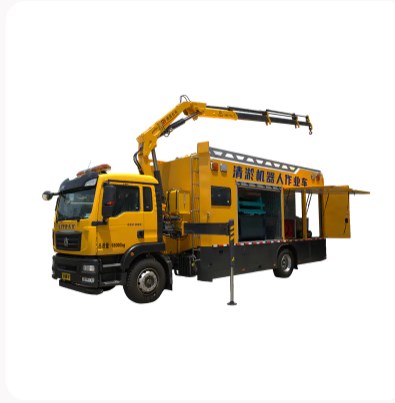
Applying Sustainable Design in Underwater Dredging Robot
Sustainability is a key indicator in modern dredging. Underwater Dredging Robot focuses on energy efficiency, durability, and low maintenance costs, using high-efficiency motors, intelligent power management, and modular design for continuous high-performance operation. Key components are made from recyclable materials, enhancing environmental friendliness and sustainability.
Future Development Trends of Underwater Dredging Robot
With advances in artificial intelligence, sensor technology, and materials science, Underwater Dredging Robot has broad application prospects. Future underwater dredging robots will not only clean sediments but may also support environmental monitoring, underwater engineering, and marine research.
Integration of AI and Sensor Technology
Future Underwater Dredging Robot will be more intelligent. Using deep learning and computer vision, the robot can identify different sediment types and obstacles, automatically optimizing dredging paths and strategies. Upgraded sensor networks enable higher-precision underwater positioning and sediment monitoring, making dredging safer, more efficient, and environmentally friendly.
Development Directions for New Types of Underwater Dredging Robots
Technological innovation will lead to new robot types, including miniaturized, modular, and multifunctional designs. Mini robots are suitable for narrow rivers and ports, modular designs allow rapid assembly and maintenance, and multifunctional robots can perform sediment removal, water quality monitoring, and ecological assessment simultaneously. These innovations greatly enhance flexibility and adaptability.
Industry Trends and Market Prospects
The global underwater dredging market increasingly demands efficient and eco-friendly technologies. Underwater Dredging Robot is expected to play an increasingly important role in ports, river management, coastal projects, and marine research. As technology costs decrease and reliability improves, Underwater Dredging Robot is poised to become a mainstream solution in underwater dredging.
Conclusion
Underwater Dredging Robot represents the forefront of modern underwater dredging technology. By integrating Submersible Excavation Technology, Autonomous Dredging Systems, and Underwater Robotics Engineering, the robot demonstrates high efficiency, precision, and safety in sediment removal. The adoption of Eco-friendly Dredging Solutions ensures sustainable underwater operations while protecting ecosystems. With continuous advancements in artificial intelligence, sensor technology, and materials science, Underwater Dredging Robot will have broader applications in underwater engineering, environmental protection, and marine research, driving revolutionary changes in underwater operations.
Overall, Underwater Dredging Robot is not only a product of technological innovation but also a symbol of the dredging industry's shift toward intelligence, environmental protection, and high efficiency. With rising market demand and technological capability, its application prospects in global underwater engineering and ecological protection are extremely promising.
PREV:Industrial-Grade Hydraulic Tools: The Core Driving Force for High Productivity
NEXT:Revolutionizing Industrial Efficiency: The Rise and Role of Hydraulic Water Pumps
NEXT:Revolutionizing Industrial Efficiency: The Rise and Role of Hydraulic Water Pumps
Interested in cooperation or have questions?
News
-
-
What is an Underwater Dredging Robot Underwater Dredging Robot is an advanced mechanical device designed speci...
READ MORE -
Introduction Winter weather brings many challenges, and one of the most critical issues is snow and ice accumu...
READ MORE -
Selecting the optimal Hydraulic Power Unit (HPU) is a critical decision that directly impacts the efficiency, ...
READ MORE

-
Factory Address
Weiwu Road, Phase II, Shexian Economic Development Zone, Mount Huangshan City, Anhui Province, China
-
Mobile Phone
+86 15212700663
Stay Connected
lf you can't find the answer you're looking for, chat with our friendly team.
Stay Connected
Copyright © Huirui Intelligent Equipment Co., Ltd. All Rights Reserved.China Custom Hydraulic and Emergency Equipment Manufacturers
