


 中文简体
中文简体
Understanding Hydraulic Water Pumps Hydraulic water pumps are pivotal components in modern industrial, agricul...
READ MOREIndustrial-Grade Hydraulic Tools: The Core Driving Force for High Productivity
In modern industrial systems, industrial-grade hydraulic tools are becoming key power systems for equipment automation, structural manufacturing, precision assembly, and large-scale equipment maintenance. As manufacturing upgrades towards intelligence, integration, and high reliability, the demand for high-performance hydraulic tools continues to grow. From the stability of pressure output to the ability to operate continuously under long-term loads, and to safety performance in extreme environments, the value of industrial-grade hydraulic tools is being continuously amplified.
Deep Optimization of Hydraulic Power Systems Becomes an Industry Trend
With the increasing complexity of production environments and the diversification of work scenarios, industrial-grade hydraulic tools are no longer limited to basic power output but are evolving towards greater efficiency, intelligence, and energy conservation. Against the backdrop of rapid iteration in industrial equipment, hydraulic systems need to demonstrate stronger sealing stability, more precise pressure control technology, and longer reliable service life. These technical indicators are becoming important considerations for enterprises when selecting equipment. Hydraulic tool manufacturers are beginning to conduct in-depth optimization in structural design, material selection, and power efficiency control to ensure equipment stability under high-load environments.
With the expansion of industrial production, the trend towards modularization and lightweighting of hydraulic tools is becoming increasingly apparent. Integrated hydraulic circuit design, optimized thermal management structures, and the introduction of intelligent monitoring components have enhanced the operability of modern hydraulic tools. Traditional equipment required extensive manual monitoring of its operating status, while today's hydraulic tools are gradually achieving real-time monitoring and automatic calibration, thereby reducing maintenance costs and improving overall operational efficiency.
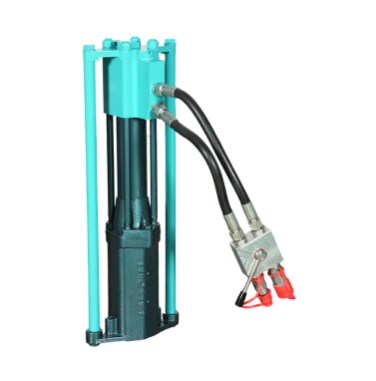
The core professional value of industrial-grade hydraulic tools is continuously increasing. The value of industrial-grade hydraulic tools lies not only in their output capacity but also in the reliability and accuracy of the system. The continuous and smooth pressure output of hydraulic systems provides significant stability during high-density operations. High-quality industrial-grade hydraulic equipment typically features high-pressure resistant manufacturing processes and low-leakage structural designs, maintaining stable power even under conditions of significant load fluctuations.
Simultaneously, hydraulic tools exhibit significant advantages in environmental adaptability. The wide temperature ranges, dusty environments, humid conditions, and even extreme outdoor conditions common in the industrial sector necessitate high-strength structures and durable technologies in the equipment. With advancements in materials engineering, various grades of wear-resistant materials, corrosion-resistant coatings, and reinforced sealing systems are increasingly being applied to hydraulic tool manufacturing. High-quality industrial-grade hydraulic tools, possessing these technological characteristics, have become indispensable basic equipment in equipment operation and maintenance.
Intelligent Technology Drives Hydraulic System Upgrades
Driven by the wave of industrial intelligence, hydraulic tools are deeply integrating with advanced sensing technologies, algorithmic monitoring systems, and networked platforms. When the tool's internal components can collect real-time data on pressure output, temperature changes, liquid level status, and operating trends, the system can predict potential faults in advance and provide timely status warnings. This intelligent monitoring mode effectively reduces downtime risks, ensuring the production line maintains efficient and continuous operation.
Compared to traditional equipment, intelligent hydraulic tools can automatically adjust their working state through information feedback mechanisms, maintaining stable power even under constantly changing operating conditions. Manufacturing enterprises can achieve lower energy consumption, fewer maintenance cycles, and higher production efficiency by leveraging this intelligent control technology. In the future development of the industry, the deep integration of hydraulic tools and digital systems will become an irreversible trend, especially in high-end manufacturing and smart factories, where this trend will further accelerate the improvement of production efficiency.
The expanding application scenarios are driving the growing demand for hydraulic tools. The application scenarios for industrial-grade hydraulic tools are significantly expanding, from equipment manufacturing and high-intensity assembly to infrastructure. Hydraulic power systems are widely used due to their high efficiency and stability. With the increasing capabilities of large-scale equipment manufacturing, the demand for hydraulic tools in terms of load capacity, continuous operation capability, and structural compactness is becoming increasingly urgent. These characteristics make them fundamental power tools in many fields.
The upgrading of the global equipment industry is driving further demand for high-grade hydraulic tools. Companies want to support production line operations with more efficient equipment and reduce errors caused by human factors. Hydraulic tools, with their greater controllability, longer service life, and more stable output performance, provide companies with a clear path to improve production efficiency. Therefore, whether in heavy industry or precision manufacturing, high-quality industrial-grade hydraulic equipment has become a crucial underlying technology for companies to enhance their competitiveness.
Driven by the rapid development of global industrial automation, the technological potential of Industrial-Grade Hydraulic Tools will be further unleashed. Future hydraulic tools will not only be power output devices but also system-level intelligent solutions, bringing higher efficiency, greater stability, and safer operation to industrial production.
PREV:Underwater Dredging Robot: Reshaping the Intelligent Future of Water Management with Core Advantages
NEXT:The key role of Underwater Dredging Robot in modern underwater engineering
NEXT:The key role of Underwater Dredging Robot in modern underwater engineering
Interested in cooperation or have questions?
News
-
-
What is an Underwater Dredging Robot Underwater Dredging Robot is an advanced mechanical device designed speci...
READ MORE -
Introduction Winter weather brings many challenges, and one of the most critical issues is snow and ice accumu...
READ MORE -
Selecting the optimal Hydraulic Power Unit (HPU) is a critical decision that directly impacts the efficiency, ...
READ MORE

-
Factory Address
Weiwu Road, Phase II, Shexian Economic Development Zone, Mount Huangshan City, Anhui Province, China
-
Mobile Phone
+86 15212700663
Stay Connected
lf you can't find the answer you're looking for, chat with our friendly team.
Stay Connected
Copyright © Huirui Intelligent Equipment Co., Ltd. All Rights Reserved.China Custom Hydraulic and Emergency Equipment Manufacturers
