


 中文简体
中文简体
Understanding Hydraulic Water Pumps Hydraulic water pumps are pivotal components in modern industrial, agricul...
READ MOREHow Do Hydraulic Tools Improve Industrial Production Efficiency?
Hydraulic tools, as indispensable equipment in modern industry, are widely used in various engineering and maintenance fields. They transmit power through fluid pressure to accomplish various high-strength and high-precision tasks. Hydraulic tools not only improve work efficiency but also ensure safety and stability during operation.
Working Principles and Core Technologies of Hydraulic Tools
The core principle of hydraulic tools is based on the incompressibility of liquids, using fluid pressure to transmit and amplify force. This principle allows hydraulic systems to provide enormous power output within a relatively small volume. A hydraulic system mainly includes a hydraulic pump, hydraulic cylinder, and hydraulic pipelines. The hydraulic pump generates pressure, the hydraulic cylinder utilizes this pressure to perform work, and the pipelines connect the various components, ensuring stable pressure transmission.
The working principle of a hydraulic system can be briefly summarized as follows: When the hydraulic pump generates pressure, the fluid flows into the hydraulic cylinder. The piston in the hydraulic cylinder is subjected to pressure, pushing the mechanical working parts to perform the predetermined actions. In this way, hydraulic tools can achieve large force output in a small space, completing various tasks such as stretching, compression, and disassembly.
Common Hydraulic Tools and Their Applications
There are many types of hydraulic tools, and the appropriate tools vary depending on different work requirements. Hydraulic tools are widely used in industrial production, construction, and automotive repair. The following are some common hydraulic tools and their main application areas:
Hydraulic Wrench
A hydraulic wrench is a tool commonly used for tightening and loosening high-torque bolts. It provides powerful torque through a hydraulic drive system and is suitable for operations requiring high torque output, such as in engineering machinery, metallurgy, chemical industry, and ship repair. Hydraulic wrenches can complete tasks efficiently and quickly, avoiding potential errors and dangers associated with traditional manual wrenches.
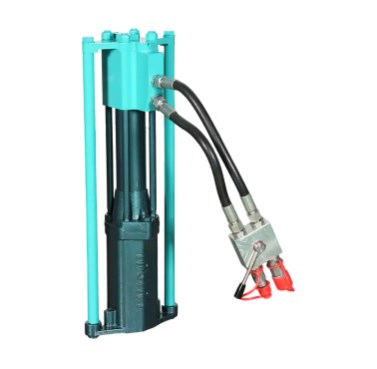
Hydraulic Shear
A hydraulic shear is a hydraulic tool used for metal cutting, rebar shearing, and other processes. It is widely used in building demolition, scrap metal recycling, and large-scale machinery dismantling. The advantage of hydraulic shears lies in their ability to quickly and efficiently complete large-scale cutting tasks, especially when dealing with thick metal materials, where hydraulic shears demonstrate excellent cutting capabilities.
Hydraulic Lifting Platforms
A hydraulic lifting platform is a device that utilizes hydraulic principles to achieve efficient vertical lifting. It is widely used in fields such as high-altitude work, equipment maintenance, and logistics transportation. Its unique hydraulic transmission system ensures a smooth and rapid lifting process, reducing the risks of manual operation and improving work efficiency.
Hydraulic Jacks
Hydraulic jacks are commonly used in mechanical maintenance, vehicle repair, and other fields. They provide powerful lifting force through hydraulic principles, easily lifting heavy objects and facilitating inspection and replacement of parts by maintenance personnel. Hydraulic jacks have a simple structure and are easy to operate, making them suitable for various maintenance tasks.
Advantages of Hydraulic Tools and Considerations for Selection
Advantages
High Efficiency and High Precision
Hydraulic tools, through the transmission of fluid pressure, can achieve high-intensity output within a relatively small volume. Therefore, hydraulic tools not only possess high energy density but also provide precise operating force in complex working environments.
High Safety
Hydraulic tools have high stability, and operators can control the pressure through the system, avoiding tool damage or accidents caused by overload. Compared with traditional mechanical tools, hydraulic tools can better ensure safety during operation.
Simple Operation
Hydraulic tools are relatively easy to operate. The control of the hydraulic system allows operators to complete high-intensity work without excessive physical labor. This greatly reduces labor intensity and operational difficulty for tasks requiring high precision and efficiency.
Considerations When Choosing Hydraulic Tools
When choosing hydraulic tools, several factors need to be considered, including the tool's working capacity, operating environment, and ease of maintenance. It is essential to select the appropriate hydraulic tool based on specific work requirements. For example, some hydraulic tools may be suitable for high-frequency, continuous use, while others may be more suitable for low-frequency, high-intensity tasks. Choosing reliable hydraulic tools is crucial for ensuring smooth operation. Poor-quality tools may not only affect work efficiency but also pose unnecessary safety hazards.
Maintenance of hydraulic tools is equally important. Regularly checking the quality of the hydraulic oil and the operating condition of various components can effectively extend the tool's service life and ensure normal operation when needed. Therefore, it is recommended to choose brands with good after-sales service and technical support.
Frequently Asked Questions (FAQ)
How often does the hydraulic oil in hydraulic tools need to be changed?
The replacement cycle of hydraulic oil is closely related to the working environment and frequency of use. Generally, hydraulic oil needs to be inspected and replaced after approximately 1000 hours of use. However, if the working environment is harsh, it is recommended to shorten the replacement cycle.
What safety precautions should be taken when using hydraulic tools?
When using hydraulic tools, avoid overloading, and regularly check the pressure and wear of the tool's components. Wear protective equipment during operation to prevent hydraulic oil leaks or malfunctions.
How to choose the right hydraulic tool?
When choosing a hydraulic tool, first clarify the requirements of the task to ensure that the tool can provide sufficient power and precision. Secondly, check the quality and brand reputation of the tool, and choose a reliable product. Finally, also consider the ease of maintenance and after-sales service of the tool.
PREV:How Can Underwater Dredging Robots Improve the Efficiency and Safety of Port Cleaning?
NEXT:Emergency Drainage Robot: An Intelligent Tool for Emergency Drainage
NEXT:Emergency Drainage Robot: An Intelligent Tool for Emergency Drainage
Interested in cooperation or have questions?
News
-
-
What is an Underwater Dredging Robot Underwater Dredging Robot is an advanced mechanical device designed speci...
READ MORE -
Introduction Winter weather brings many challenges, and one of the most critical issues is snow and ice accumu...
READ MORE -
Selecting the optimal Hydraulic Power Unit (HPU) is a critical decision that directly impacts the efficiency, ...
READ MORE

-
Factory Address
Weiwu Road, Phase II, Shexian Economic Development Zone, Mount Huangshan City, Anhui Province, China
-
Mobile Phone
+86 15212700663
Stay Connected
lf you can't find the answer you're looking for, chat with our friendly team.
Stay Connected
Copyright © Huirui Intelligent Equipment Co., Ltd. All Rights Reserved.China Custom Hydraulic and Emergency Equipment Manufacturers
