


 中文简体
中文简体
Understanding Hydraulic Water Pumps Hydraulic water pumps are pivotal components in modern industrial, agricul...
READ MOREWhy are Hydraulic Water Pumps Indispensable Core Components in Engineering Machinery?
In modern engineering machinery, agricultural irrigation, industrial cooling systems, and marine power systems, hydraulic water pumps play a crucial role. They are not only key components for power transmission but also directly affect the operating efficiency and lifespan of the equipment. With the continuous development of hydraulic technology, hydraulic water pumps have made significant progress in performance optimization, durability, and ease of operation, making them indispensable core components in various mechanical systems.
Basic Principles and Structural Characteristics of Hydraulic Water Pumps
The core function of a hydraulic water pump is to convert mechanical energy into fluid kinetic energy. Through the fluid movement inside the pump body, it achieves water lifting and pressure output. Its basic principle relies on the incompressibility of liquids, using the reciprocating motion or rotation of pistons, impellers, or gears within the pump chamber to create a cycle of suction and discharge, thus completing the energy conversion.
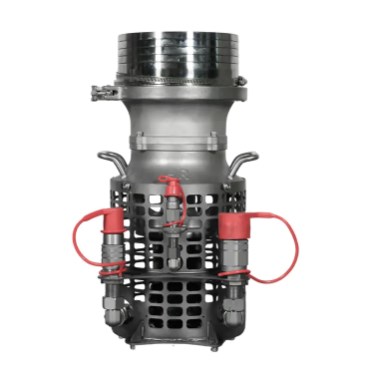
Structurally, a hydraulic water pump typically consists of a pump body, impeller or gear set, bearings, seals, and control valves. The compactness and wear resistance of the pump body design directly affect the pump's operational stability, while the precision of the seals determines the reliability of the hydraulic water pump under high-pressure conditions. Modern hydraulic water pumps prioritize corrosion resistance and high-temperature resistance in material selection, ensuring efficient operation even under complex working conditions.
Performance Advantages and Operating Characteristics
The significant advantages of hydraulic water pumps lie in their high efficiency and stability. Compared to traditional mechanical pumps, hydraulic water pumps can maintain constant flow and pressure output over a wide load range, ensuring the smooth operation of the entire hydraulic system. At the same time, they have a high level of noise control and low vibration, reducing the impact on surrounding mechanical equipment and increasing the overall system lifespan.
In terms of operating characteristics, hydraulic water pumps can achieve rapid response and precise control. This is particularly important for systems that require frequent adjustment of water flow and pressure. Through reasonable pump body design and optimized flow channels, hydraulic water pumps can reduce energy consumption and improve water flow efficiency, thus achieving energy saving and environmental protection.
Application Scenarios and Adaptability
Hydraulic water pumps are widely used in various scenarios requiring hydraulic transmission. Their adaptability is mainly reflected in their pressure resistance, temperature range, and flow regulation capabilities. In the field of construction machinery, hydraulic water pumps provide reliable cooling and lubrication water flow for equipment such as excavators and loaders; in the agricultural sector, they ensure a stable water supply for irrigation systems; and in industrial and marine systems, the high pressure resistance of hydraulic water pumps ensures the continuous operation of cooling systems.
The design of hydraulic water pumps places greater emphasis on environmental adaptability and ease of operation. Many products adopt a modular structure, facilitating maintenance and replacement of parts, while also exhibiting excellent dust and corrosion resistance, enabling stable operation even under harsh working conditions.
Technological Upgrades and Innovations
Modern hydraulic water pump technology upgrades mainly focus on flow control, energy efficiency, and material innovation. By precisely controlling the pump's output pressure and flow rate, hydraulic water pumps can achieve the optimal balance between system requirements and energy consumption. In addition, the application of advanced composite materials and wear-resistant coatings significantly improves the durability of the pump body and impeller, allowing the equipment to maintain high efficiency even under long-term high-load operation.
In terms of control technology, hydraulic water pumps are gradually achieving intelligent management. With integrated sensors and control modules, the pump's operating status, temperature, and pressure can be monitored in real time, further improving equipment safety and operational convenience.
Maintenance and Life Cycle Management
The long-term efficient operation of hydraulic water pumps depends on a scientific maintenance strategy. Regularly checking the wear of the pump body, seals, and bearings, and promptly cleaning impurities inside the pump, can effectively extend the pump's service life. Maintaining clean fluid and proper lubrication also reduces internal friction and prevents premature damage to the pump body.
In terms of life cycle management, modern hydraulic water pump designs place greater emphasis on modularity and replaceability. By quickly replacing wear-prone parts, downtime is reduced, improving overall equipment efficiency and providing reliable support for various mechanical systems.
FAQ: Frequently Asked Questions about Hydraulic Water Pumps
Q: What working environments are suitable for hydraulic water pumps?
A: Hydraulic water pumps can adapt to high-temperature, high-pressure, and corrosive liquid environments, making them suitable for various working conditions such as construction machinery, industrial cooling systems, marine power, and agricultural irrigation.
Q: How do hydraulic water pumps improve energy efficiency?
A: By optimizing the pump body design, controlling output flow and pressure, and using high-efficiency wear-resistant materials, hydraulic water pumps can reduce energy consumption while maintaining performance.
Q: What are the key aspects of hydraulic water pump maintenance?
A: The key aspects are checking the wear of the pump body and seals, maintaining clean and lubricated fluid, and promptly replacing worn parts to ensure long-term stable operation of the pump.
Q: What is the typical lifespan of a hydraulic water pump?
A: The lifespan depends on the operating conditions and maintenance. With proper maintenance and operation, a hydraulic water pump can typically achieve long-term efficient operation.
PREV:Emergency Drainage Robot: An Intelligent Tool for Emergency Drainage
NEXT:How do high-efficiency snow removal equipment improve operational quality and reliability?
NEXT:How do high-efficiency snow removal equipment improve operational quality and reliability?
Interested in cooperation or have questions?
News
-
-
What is an Underwater Dredging Robot Underwater Dredging Robot is an advanced mechanical device designed speci...
READ MORE -
Introduction Winter weather brings many challenges, and one of the most critical issues is snow and ice accumu...
READ MORE -
Selecting the optimal Hydraulic Power Unit (HPU) is a critical decision that directly impacts the efficiency, ...
READ MORE

-
Factory Address
Weiwu Road, Phase II, Shexian Economic Development Zone, Mount Huangshan City, Anhui Province, China
-
Mobile Phone
+86 15212700663
Stay Connected
lf you can't find the answer you're looking for, chat with our friendly team.
Stay Connected
Copyright © Huirui Intelligent Equipment Co., Ltd. All Rights Reserved.China Custom Hydraulic and Emergency Equipment Manufacturers
